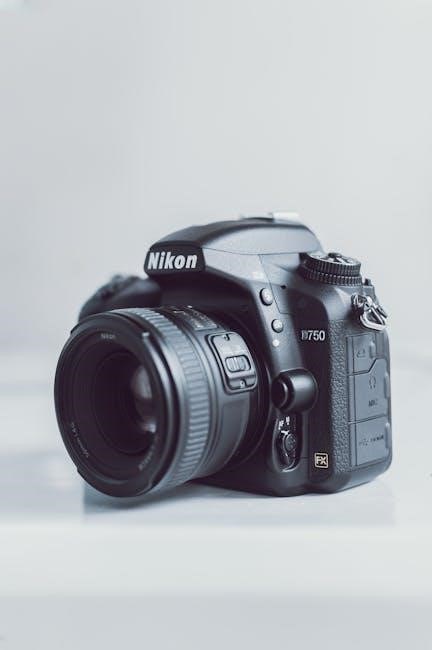
Nikon D3000 Manual: A Comprehensive Guide
This guide offers detailed instructions, troubleshooting, and specifications for the Nikon D3000 DSLR camera, available as a 216-page PDF download.
Explore user manuals, online resources, and video tutorials to master your Nikon D3000’s features and resolve common issues effectively.
Access a 15.4 MB PDF version in Russian, alongside comprehensive guides covering everything from initial setup to advanced manual controls.
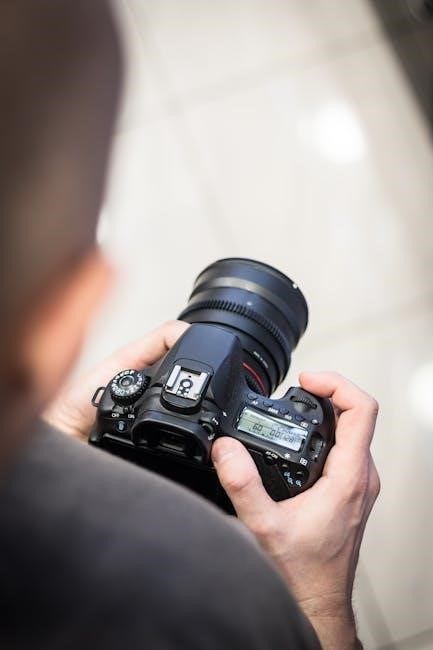
The Nikon D3000 is a popular entry-level DSLR camera, celebrated for its user-friendly design and impressive image quality. This guide serves as a comprehensive resource for both beginners and enthusiasts seeking to fully utilize its capabilities.
Released in 2009, the D3000 boasts a 10.2-megapixel sensor and a versatile range of features, making it an excellent choice for capturing memorable moments. Detailed instructions, available in PDF format, cover every aspect of operation;
Whether you’re a novice photographer or looking to refine your skills, this manual will empower you to unlock the full potential of your Nikon D3000.
Key Features and Specifications

The Nikon D3000 features a 10.2-megapixel DX-format CCD sensor, delivering detailed and vibrant images. It offers an ISO range of 100-1600, expandable to 3200, for excellent low-light performance.
Key specifications include an 11-point autofocus system, 3 frames per second continuous shooting, and a 2.7-inch LCD screen. The camera supports SD and SDHC memory cards.
Available as a 15.4 MB PDF, the manual details these features, alongside specifications like its compact body and user-friendly interface, making it ideal for beginners.
Understanding the Camera Body and Controls
The Nikon D3000’s body features clearly labeled buttons and dials, detailed in the comprehensive manual. Users can learn to lock focus using AF-A and AF-C modes with the shutter button.
The manual guides users through the viewfinder and LCD screen, explaining their functions for composing shots and reviewing images. It details the AE-L/AF-L button’s role in locking exposure and focus.
This section of the PDF provides a visual overview, helping photographers quickly grasp the camera’s layout and operational elements.
Buttons and Dials Explained
The Nikon D3000 manual meticulously details each button and dial’s function. Learn how to utilize the shutter release button for half-press focusing and full-press capture.
Explore the AE-L/AF-L button, crucial for locking both exposure and focus independently, enhancing control in dynamic shooting scenarios. The manual clarifies dial usage for adjusting settings like aperture and shutter speed.
Understanding these controls, as outlined in the 216-page guide, unlocks the camera’s full potential, enabling precise adjustments and creative expression.
Viewfinder and LCD Screen Overview
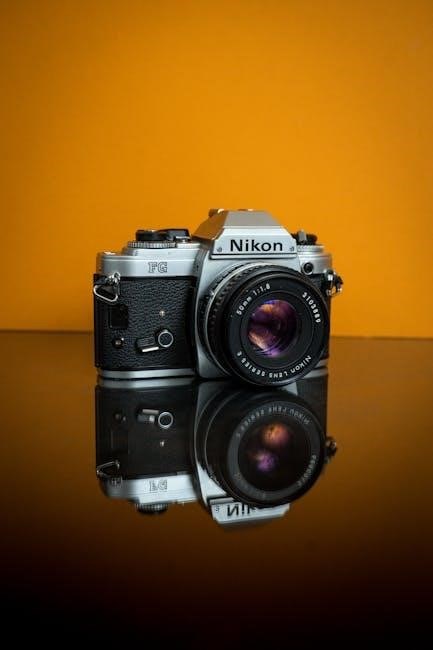
The Nikon D3000’s manual provides a detailed overview of both the optical viewfinder and the LCD screen. The viewfinder displays crucial shooting information, including focus points and exposure settings.
Learn to interpret the indicators within the viewfinder for accurate composition and focus confirmation. The LCD screen facilitates image review, menu navigation, and live view shooting.
The 216-page guide explains how to customize the LCD display and understand the various information overlays, enhancing your overall shooting experience and control.
Setting Up Your Nikon D3000
The Nikon D3000 manual guides you through the initial setup process, beginning with inserting the battery and a compatible memory card. Proper installation is crucial for camera operation.
Follow the step-by-step instructions to configure initial camera settings, including date, time, and image quality preferences. The 216-page guide details menu options for personalized customization.
Ensure correct setup for optimal performance and to avoid potential errors. This foundational step, detailed in the PDF, prepares your camera for successful photography.
Inserting the Battery and Memory Card
The Nikon D3000 manual provides clear instructions for inserting the battery pack into the designated compartment, ensuring a secure connection for reliable power. Correct polarity is essential.
Similarly, the guide details how to insert a compatible memory card, crucial for storing your photos. The manual specifies supported card types and proper insertion techniques.
Refer to page 47 of the online manual for visual aids and detailed steps. Proper installation of both components is fundamental to getting your Nikon D3000 operational.
Initial Camera Settings and Configuration
The Nikon D3000 manual guides users through essential initial settings, including language selection, date/time configuration, and image quality preferences. These foundational steps personalize the camera.
Crucially, the manual details how to set the shooting date and time accurately, vital for proper image organization. It also explains customizing menu options for optimal performance.
Refer to the comprehensive guide for detailed instructions on configuring these settings. Proper initial setup ensures a smooth and tailored shooting experience with your Nikon D3000.
Shooting Modes Explained
The Nikon D3000 manual thoroughly explains various shooting modes, catering to all skill levels. Auto mode simplifies photography for beginners, handling all settings automatically for effortless image capture.
For more control, the manual details Program (P), Aperture-priority (A), and Shutter-priority (S) modes. These allow users to adjust specific settings while the camera manages others.
Understanding these modes, as outlined in the guide, unlocks creative potential and enables photographers to achieve desired effects. Explore the manual for detailed explanations and practical examples.
Auto Mode for Beginners
The Nikon D3000 manual highlights Auto mode as the simplest option for new photographers. In this mode, the camera automatically selects optimal settings for aperture, shutter speed, and ISO, ensuring well-exposed images with minimal effort.

This mode is ideal for everyday snapshots and situations where quick, hassle-free shooting is desired. The manual emphasizes that Auto mode removes the complexity of manual settings, allowing beginners to focus on composition.
It’s a great starting point for learning photography, providing immediate results while building confidence before exploring more advanced modes.
Program, Aperture-Priority, and Shutter-Priority Modes
The Nikon D3000 manual details three semi-automatic modes offering greater creative control. Program (P) mode allows the camera to set both aperture and shutter speed, while the user adjusts ISO and other settings.
Aperture-Priority (A) mode lets you choose the aperture, controlling depth of field, with the camera selecting the appropriate shutter speed. Shutter-Priority (S) mode allows control over shutter speed, freezing or blurring motion.
These modes bridge the gap between Auto and full Manual, enabling experimentation and learning photographic principles.
Focusing Modes and Techniques
The Nikon D3000 manual explains two primary autofocus modes: AF-S (Single Servo) for stationary subjects, locking focus when the shutter button is half-pressed, and AF-C (Continuous Servo) for tracking moving subjects.
Manual focus is also available, utilizing the focusing ring on the lens. Locking focus is achieved by pressing the AE-L/AF-L button after half-pressing the shutter.
Understanding these modes and techniques is crucial for capturing sharp, well-focused images in various shooting scenarios.
Autofocus (AF) Modes: AF-S and AF-C
The Nikon D3000 offers AF-S, ideal for still subjects, achieving focus upon half-pressing the shutter release and maintaining it until re-composition or release. AF-C continuously tracks moving subjects, adjusting focus as they change position—perfect for action photography.
Selecting the appropriate mode is vital; AF-S prevents refocusing during slight movements, while AF-C ensures sharpness with dynamic subjects.
The manual details how to switch between these modes via the camera’s settings.
Manual Focus Operation
The Nikon D3000 allows precise manual focus control, overriding the autofocus system for situations demanding accuracy or when autofocus struggles—like low light or challenging patterns.
Switching to manual focus is achieved via the lens’s focus ring and the camera’s focus mode selector. The manual guides users through this process, detailing how to fine-tune focus using the viewfinder.
Utilizing live view enhances precision, magnifying the image for critical focus confirmation.
Exposure Control: Aperture, Shutter Speed, and ISO
The Nikon D3000 manual comprehensively explains exposure control, detailing the interplay between aperture, shutter speed, and ISO sensitivity—the “exposure triangle”.
Understanding how each setting impacts image brightness and depth of field is crucial for creative control. The guide clarifies aperture’s role in depth of field, shutter speed in motion blur, and ISO in low-light performance.
Mastering exposure compensation allows users to fine-tune brightness beyond automatic settings, ensuring properly exposed images in various conditions.
Understanding the Exposure Triangle
The Nikon D3000 manual elucidates the exposure triangle – the relationship between aperture, shutter speed, and ISO. It explains how these three elements work together to determine an image’s brightness and overall look.
Adjusting one setting necessitates compensating with others to maintain proper exposure. The guide details how wider apertures create shallow depth of field, faster shutter speeds freeze motion, and higher ISOs enhance low-light capability;
Grasping this concept is fundamental for moving beyond automatic modes and achieving creative control over your photographs.
Using Exposure Compensation
The Nikon D3000 manual details exposure compensation, a crucial tool for fine-tuning brightness in various shooting scenarios. It allows you to override the camera’s automatic metering system, brightening or darkening images as needed.
When shooting scenes with strong backlighting or predominantly white/dark subjects, exposure compensation ensures accurate results. The guide explains how to use the +/- button to adjust exposure values in steps.
Mastering this feature empowers you to achieve properly exposed photos, even in challenging lighting conditions, enhancing your creative control.
Working with Flash
The Nikon D3000 manual comprehensively covers the camera’s built-in flash features, detailing its functionality and limitations. It explains how to activate and deactivate the flash, as well as utilize various flash modes for different shooting situations.
Furthermore, the guide explores compatibility with external flash units, expanding your lighting options. Learn how to connect and configure external flashes for more powerful and versatile illumination.
Understanding flash settings and external flash compatibility unlocks creative possibilities, allowing you to enhance image quality in low-light conditions.
Built-in Flash Features
The Nikon D3000 manual details the built-in flash’s capabilities, including its automatic and manual modes. It explains how to utilize the flash for fill-in lighting, balancing the exposure in bright conditions, and illuminating subjects in low light.

Discover how to lock flash exposure (AE-L/AF-L) for consistent results and explore the flash compensation function to fine-tune flash output. The guide also covers red-eye reduction modes.
Mastering these features allows photographers to effectively use the integrated flash for improved image quality and creative control.
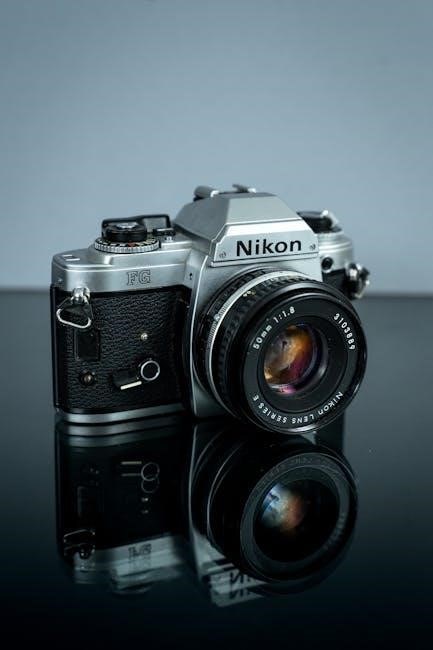
External Flash Compatibility
The Nikon D3000 manual outlines compatibility with Nikon’s Speedlight system, enabling advanced lighting techniques. It details how to connect and utilize external flashes for greater power, control, and creative possibilities beyond the built-in flash.
Learn about utilizing the hot shoe and optional wireless triggers for off-camera flash setups. The guide explains how to leverage TTL (Through-The-Lens) flash metering for accurate exposures.
Expanding your lighting toolkit with compatible Speedlights unlocks professional-level results and artistic expression;
Navigating the Menu System
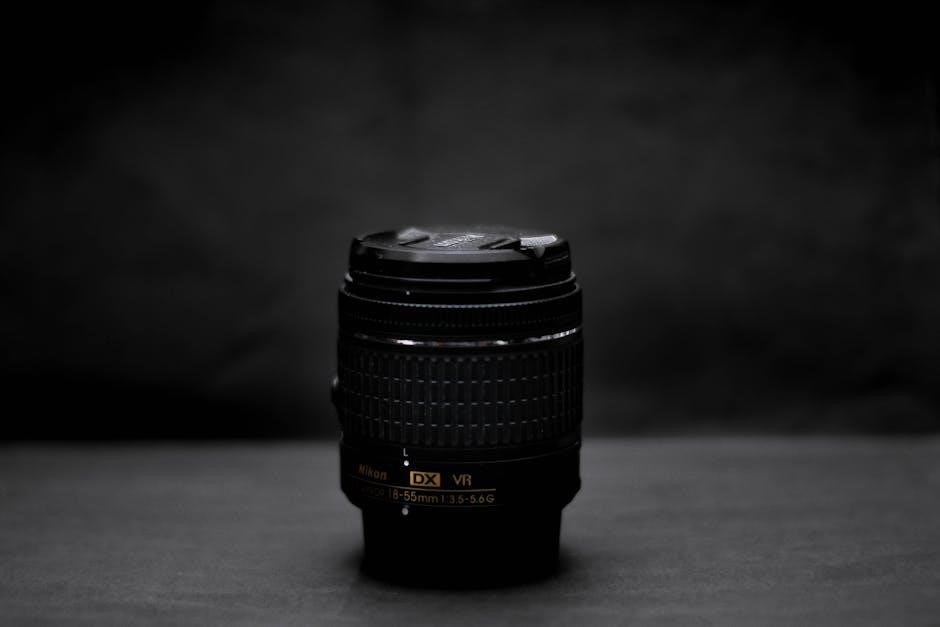
The Nikon D3000 manual provides a detailed walkthrough of its menu structure, essential for customizing camera settings. It explains how to access and modify options related to image quality, autofocus, shooting modes, and more.
Understand the organization of menu categories and locate specific settings efficiently. The guide clarifies the function of each menu option, empowering users to tailor the camera to their preferences.
Mastering the menu system unlocks the full potential of the D3000, allowing for precise control over every aspect of image capture.
Customizing Menu Settings
The Nikon D3000 manual details how to personalize camera functions via its menu system. Users can adjust settings for autofocus, image quality, and display options to match their shooting style.
Explore options to modify button assignments, customize the setup menu, and fine-tune image parameters like color space and sharpening. The guide explains each setting’s impact on image results.
Tailoring these settings allows photographers to optimize the D3000 for specific scenarios, enhancing workflow and creative control.
Understanding Menu Options
The Nikon D3000 manual comprehensively explains the camera’s menu structure, divided into categories like shooting, playback, and setup. Each option is detailed, clarifying its function and impact on image capture.
Navigate through menus to adjust settings for image size, quality, autofocus modes, and white balance. The guide clarifies complex options, ensuring users understand their effects.
Mastering these menu options unlocks the D3000’s full potential, enabling photographers to customize the camera to their preferences and shooting conditions.
Image Quality Settings and File Formats
The Nikon D3000 manual details crucial image quality settings, focusing on the choice between JPEG and RAW file formats. JPEGs offer convenience and smaller file sizes, while RAW provides maximum editing flexibility.
Understand how to adjust image size and quality levels to balance detail and storage space. The guide explains the impact of each setting on final image appearance.
Selecting the appropriate format and settings ensures optimal image quality tailored to your specific needs, from quick sharing to professional post-processing.
JPEG vs. RAW Image Formats
The Nikon D3000 manual clarifies the differences between JPEG and RAW formats. JPEGs are compressed, ready-to-use images with some data loss, ideal for immediate sharing and smaller storage needs.
RAW files, conversely, contain all image data captured by the sensor, offering extensive editing latitude in post-processing. This allows for greater control over white balance, exposure, and detail recovery.
Choosing RAW is recommended for serious photographers, while JPEG suits casual users prioritizing convenience and file size.
Setting Image Size and Quality
The Nikon D3000 manual details how to adjust image size and quality within the camera’s menu system. Larger image sizes (measured in pixels) capture more detail, suitable for printing or extensive cropping, but require more storage space.
Quality settings, typically ‘Fine’, ‘Normal’, or ‘Basic’, control the level of JPEG compression. Higher quality settings preserve more detail but increase file size. RAW files offer maximum quality, bypassing compression.
Consider your intended use when selecting these settings to balance image quality and storage capacity.
Troubleshooting Common Issues
The Nikon D3000 manual provides solutions for frequently encountered problems. Error messages are explained, guiding users through corrective actions. Focusing issues, such as blurry images, are addressed with tips on autofocus modes and manual focus techniques.

Common concerns like card errors or camera freezes are covered, offering step-by-step resolutions. Refer to the manual’s troubleshooting section for specific error codes and their meanings.
Utilize online resources and forums for additional support and community-based solutions.
Dealing with Error Messages
The Nikon D3000 manual dedicates sections to deciphering error messages displayed on the LCD screen. Each code indicates a specific problem, ranging from card errors to internal malfunctions. Understanding these messages is crucial for effective troubleshooting.
The manual provides detailed explanations and recommended solutions for each error. Common errors like “Card full” or “File error” have straightforward fixes outlined. Refer to the index for quick access to specific error codes.
Consult online forums for further assistance.
Resolving Focusing Problems
The Nikon D3000 manual details autofocus (AF) modes – AF-S for stationary subjects and AF-C for moving ones. If images appear blurry, verify the correct AF mode is selected for the scene. Ensure sufficient light, as low light impacts AF performance.
Manual focus is an alternative; the manual explains how to engage it and fine-tune focus using the viewfinder. Check the lens for damage or dirt, which can hinder focusing accuracy. Refer to page 47 for locking focus.
Downloading the Nikon D3000 Manual (PDF)
A comprehensive Nikon D3000 manual in PDF format is readily available online, weighing approximately 15.4 MB. This detailed guide, spanning 216 pages, provides extensive instructions for all camera functions. Users can access the manual for free, enabling offline reading and convenient reference.
Numerous websites offer direct download links, ensuring easy access to the complete user guide. The PDF covers everything from initial setup to advanced shooting techniques, aiding both beginners and experienced photographers.
Resources and Further Learning
Beyond the official Nikon D3000 manual, a wealth of online resources exists to enhance your photography skills. Explore numerous tutorials and support forums dedicated to Nikon cameras, offering practical advice and troubleshooting assistance. These platforms connect you with a community of users sharing experiences and knowledge.
Discover video overviews demonstrating camera features and techniques, complementing the written instructions. Utilize these resources to deepen your understanding and unlock the full potential of your Nikon D3000.
Online Tutorials and Support Forums
Numerous online tutorials provide visual guidance, supplementing the Nikon D3000 manual’s written instructions. These resources demonstrate camera functions and photographic techniques, catering to various skill levels. Support forums offer a platform to connect with fellow users, ask questions, and share experiences.
Benefit from collective knowledge and troubleshooting advice within these communities. Access a wealth of information, expanding your understanding beyond the official documentation and enhancing your photographic journey.